At a Japan America Affairs Council event in Cupertino last year, hosted by NTT, I spoke with Kenneth Faulve-Montojo, a professor from Santa Clara University who described the Philippines' ongoing confrontation with China over contested reefs in the South China Sea. The details were specific: Chinese coast guard vessels harassing Philippine resupply missions to Second Thomas Shoal, water cannons deployed against wooden boats, collisions at low speed, a Philippine sailor losing a thumb to shrapnel from a water cannon blast. Each incident falls below the threshold of armed conflict. Taken together, they represent a sustained challenge to Philippine sovereignty and, more importantly, a slow-motion test of the US mutual defense treaty. The professor's point was sharp: this is the real confrontation in the Pacific right now, and it is happening every week.
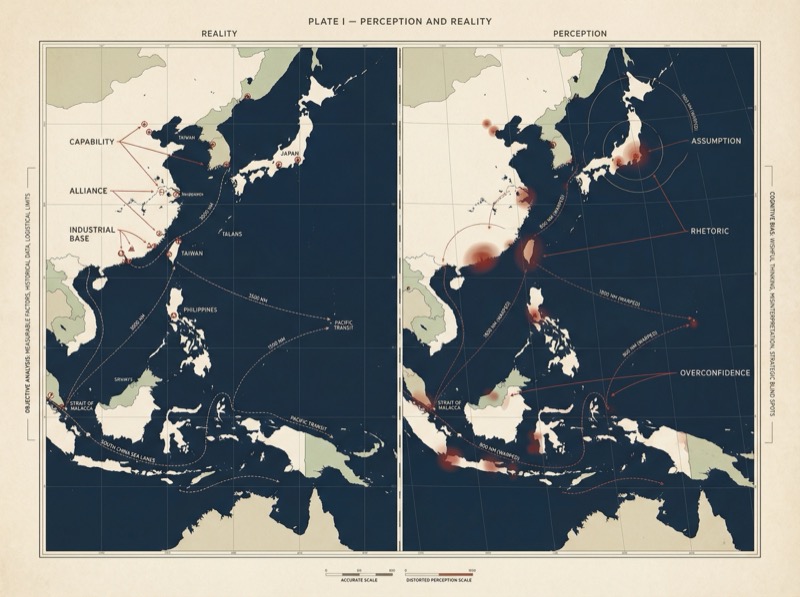
He then drew a contrast with Taiwan. The Taiwan scenario is the most consequential military contingency in the world: a Chinese amphibious invasion of a democratic island of 23 million people, with the potential to draw in the United States, Japan, and possibly others. It is also, for the moment, theoretical. It has not materialized, and there are reasonable arguments that it may never. The gap between the tangible, daily friction over Philippine reefs and the theoretical, catastrophic scenario over Taiwan is not just a difference of scale. It is a difference of kind, and it creates a particular problem for strategic planning: how do you prepare for the hypothetical without neglecting the actual?
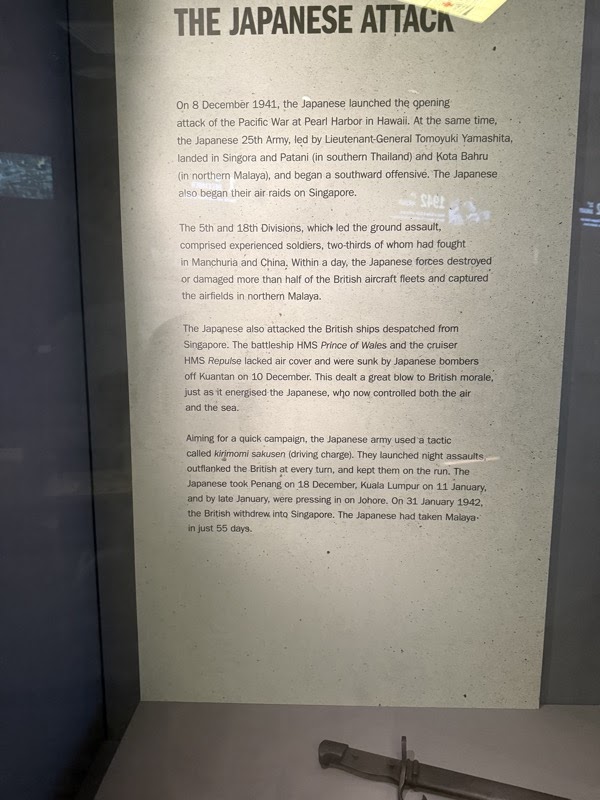
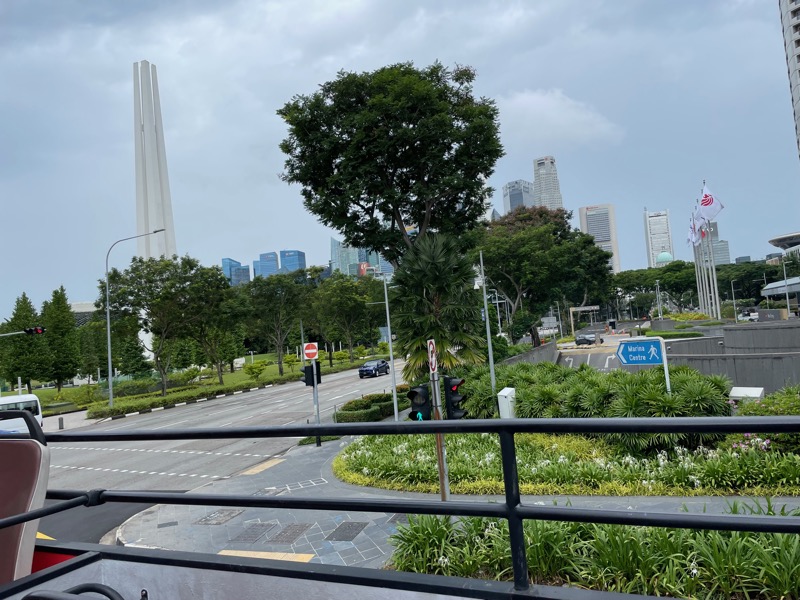
That question has historical precedent, and the answer is not encouraging. The British Empire spent decades preparing for a theoretical defense of Singapore as an impregnable fortress, the "Gibraltar of the East." The strategy assumed the fortress would hold until the fleet arrived. The fleet never came. When the Japanese attacked in December 1941, they did not assault the fortress directly. They came through the Malay Peninsula, moving quickly through terrain the British had assumed was impassable, and took Singapore from the landward side in 55 days. The British had prepared for one scenario and encountered another. The fortress narrative had become so embedded in doctrine that it crowded out the capacity to recognize a different kind of threat.
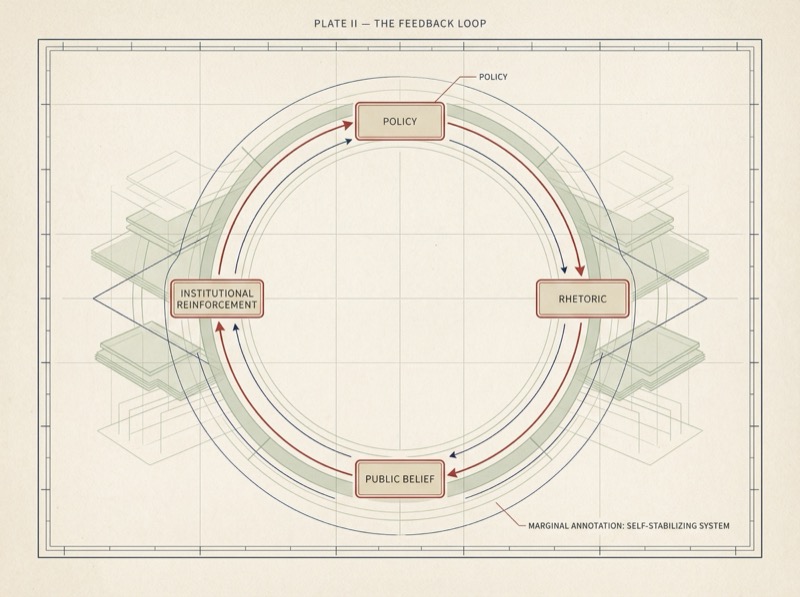
This is a pattern in Asian foreign affairs, and it transcends any single nation or era. Propaganda warps the thinking of decision-makers, and in the Pacific this problem is unusually persistent. The British believed "Fortress Singapore." The Japanese believed the Greater East Asia Co-Prosperity Sphere, a narrative that combined genuine anti-colonial sentiment with strategic resource extraction so seamlessly that even the Japanese leadership had difficulty distinguishing ideology from interest. In both cases, the narrative was not simply a lie told to the public. It was a framework that shaped how leaders understood their own strategic position. When the narrative diverged from reality, the leaders adjusted reality to fit the narrative rather than the other way around.
The present-day Pacific has its own narratives, and some of them deserve the same scrutiny. China's assertion that Taiwan is a "core interest" whose resolution is inevitable functions as a narrative commitment that constrains Beijing's own decision-making. The more often it is repeated, the harder it becomes to walk back without loss of face, which is why many analysts worry that the narrative itself could become a driver of conflict even if the underlying strategic calculus does not support an invasion. On the American side, the concept of the "unmanned hellscape," Admiral Paparo's vivid description of how autonomous drones would turn the Taiwan Strait into an impassable killing zone, is both a deterrence concept and a narrative. It is meant to convince Beijing that an invasion would fail. But deterrence narratives have a way of becoming assumptions: if we believe the hellscape will work, do we invest enough in the alliance relationships, the logistics networks, and the political commitments that deterrence also requires? The British believed the coastal batteries would hold Singapore. The batteries pointed the wrong way.
The Philippines reef confrontations test this in real time. The narrative framework says the US commitment is ironclad, but the daily reality is more ambiguous: water cannons, diplomatic protests, carefully calibrated responses that keep the temperature below armed conflict. If the US cannot deter Chinese coast guard vessels from harassing Philippine fishermen, what does that say about the credibility of deterrence against a much larger contingency?
The most dangerous moment in any strategic competition is when the people making the decisions start believing their own slogans. The British did this in Singapore. The Japanese did it with the Co-Prosperity Sphere. The risk today is not that any single actor in the Pacific is lying to the public about its strategic position. The risk is that the narratives become so familiar, so institutionally embedded, that they substitute for the harder work of assessing actual capabilities, actual alliances, and actual political will. The fortress narrative felt comfortable until the fortress fell. The question for everyone operating in the Pacific today is whether their narrative would survive contact with reality, and whether they have the institutional honesty to find out before reality forces the issue.